Guides
The At-Home Session: Self-Portraits of Elegant Feet
By Eva · Published 7 September 2026 · Updated 7 September 2026 · 6 min read
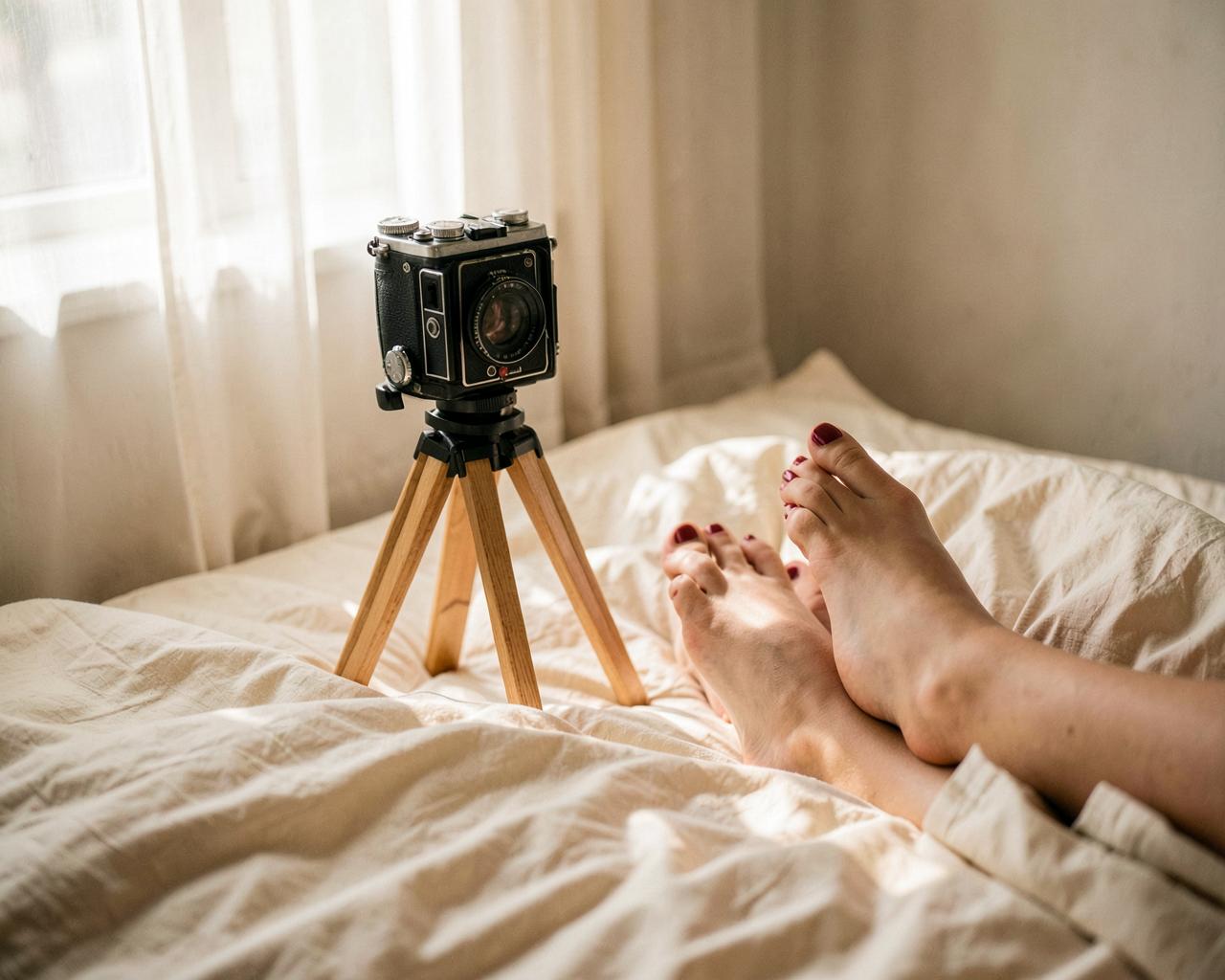
The question I receive most often is disarmingly simple: who takes these photographs? The answer, almost always, is that I do — alone, at home, with a self-timer and a window. The at-home session is the foundation of this entire journal, and it is more achievable than most people believe. No studio, no assistant, no equipment that does not fit in a drawer. This is the complete method as I have refined it over years: the light, the setups that work in an ordinary bedroom and bathroom, the self-timer technique, and the editing that keeps the result soft rather than artificial.
The window is the studio
Everything begins and ends with a window. North-facing if you have one, any orientation if you time it right — the goal is always the same: soft, directional light that never strikes the skin directly. Direct sun through glass is harsh and speckled; light reflected off a bright wall opposite, or filtered through a sheer curtain, is the satin this journal is built on.
The working position is simple: the subject — the foot — sits roughly parallel to the window, between half a metre and a metre and a half from it, and the camera faces the scene from the darker side of the room. This gives the gentle gradient from light to shadow across the instep that defines the whole aesthetic. Turn off every artificial light in the room; a single warm bulb mixed with daylight pulls skin tones in two directions at once.
Time of day matters more than equipment. Mid-morning and late afternoon give the longest, softest windows; the harsh hours between eleven and three are for other things. I plan sessions the way other people plan calls — they are in the calendar, they have a start time, and they do not move for weather less than dramatic.
Three setups that always work
The bed, unmade on purpose. Ivory or pale linen, sheets pulled and rumpled by hand rather than by accident, feet emerging from the folds. The bed gives softness, height variation, and an intimacy that reads as candid even when every fold was placed. This is where most of the journal's barefoot frames begin.
The floor by the window, on something with character: a worn rug, herringbone parquet, a sheet of dark marble-look tile. Floor level gives the strongest arch poses — a pointed foot with the heel raised, shot from low and from the side, is the single most elegant frame in this entire practice, and it requires nothing but floor and patience.
The bathroom, for water and stone. The edge of a filled bath, wet feet on dark tile, steam softening the background — the bathroom is where close detail work happens, because its hard surfaces bounce light beautifully and its mirrors, used sparingly, double a composition. One warning from experience: condensation on a lens is invisible until you review the frames. Give the camera five minutes to acclimatise.
Self-timer technique: being photographer and subject
The camera goes low on a small tripod or a stack of books — lens at ankle height for floor work, slightly above for the bed. Focus is the one genuine difficulty of self-portraiture: place an object where your foot will be — a shoe works perfectly — focus on it, lock focus, then switch to the ten-second timer or a remote. Take four frames per pose without moving anything but the foot; micro-variations of toe and arch are where the keeper hides.
Work in sequences, not singles. A sequence is a small story: entering the frame, settling, the arch rising, the toes spreading, the heel lifting — eight to twelve frames that belong together. Sequences forgive imperfect individual frames because the series carries the mood, and they are what readers linger on longest when the journal publishes a set.
The hardest skill is reviewing without breaking the session. Resist the urge to check every frame on the screen; check once per setup, adjust, and stay in the rhythm. The state of relaxed attention that makes feet photograph well is the same state that makes any portrait work, and it evaporates each time you walk back to the camera frowning.
Wardrobe, lacquer and the details that carry a frame
At home, wardrobe stays minimal and deliberate: a hem that stops at the knee or mid-thigh, a robe in silk or cotton, an ankle bracelet at most. The frame is cropped by intention at the knee or thigh — everything above is the viewer's imagination, which is the entire editorial line of this journal: suggestive, never explicit.
Lacquer is chosen against the set, not against the mood of the morning. Deep reds and bordeaux against ivory linen; nude and blush against dark tile; nothing glittery, ever, under window light. Two fresh coats the evening before, not the same day — same-day lacquer photographs as texture, and not the good kind.
The detail pass happens before the first frame: oil on the instep for the satin sheen, cuticles checked, the stray thread cut from the rug, the lampshade angled out of the background. Ten minutes of detail work saves an hour of editing, and some things — a creased sole, a chipped toe — cannot be edited without the image losing the honesty that makes it worth keeping.
Editing with restraint
The edit is a light pass, and it is the same every time: white balance toward warm, highlights down, shadows lifted slightly, a touch of softness in the skin texture, and grain — real grain, added deliberately — to keep the image photographic rather than digital. The goal is that no viewer ever notices the edit; they should feel the light, not the slider.
What I never do: smoothing that erases skin texture, reshaping of any kind, colour shifts that push lacquer toward unnatural. The line this journal holds in its framing — suggestive, never explicit — it holds in post-production as well. An image that needs heavy editing was a lighting mistake, and the honest fix is to shoot it again at a better hour.
Finally, keep the rejects for a day before deleting. The frame that looked wrong in the fatigue of a session often reads differently the next morning, and some of the journal's most-loved images were nearly discarded at midnight. Editing is a craft, but deciding is the art.
Detail plates
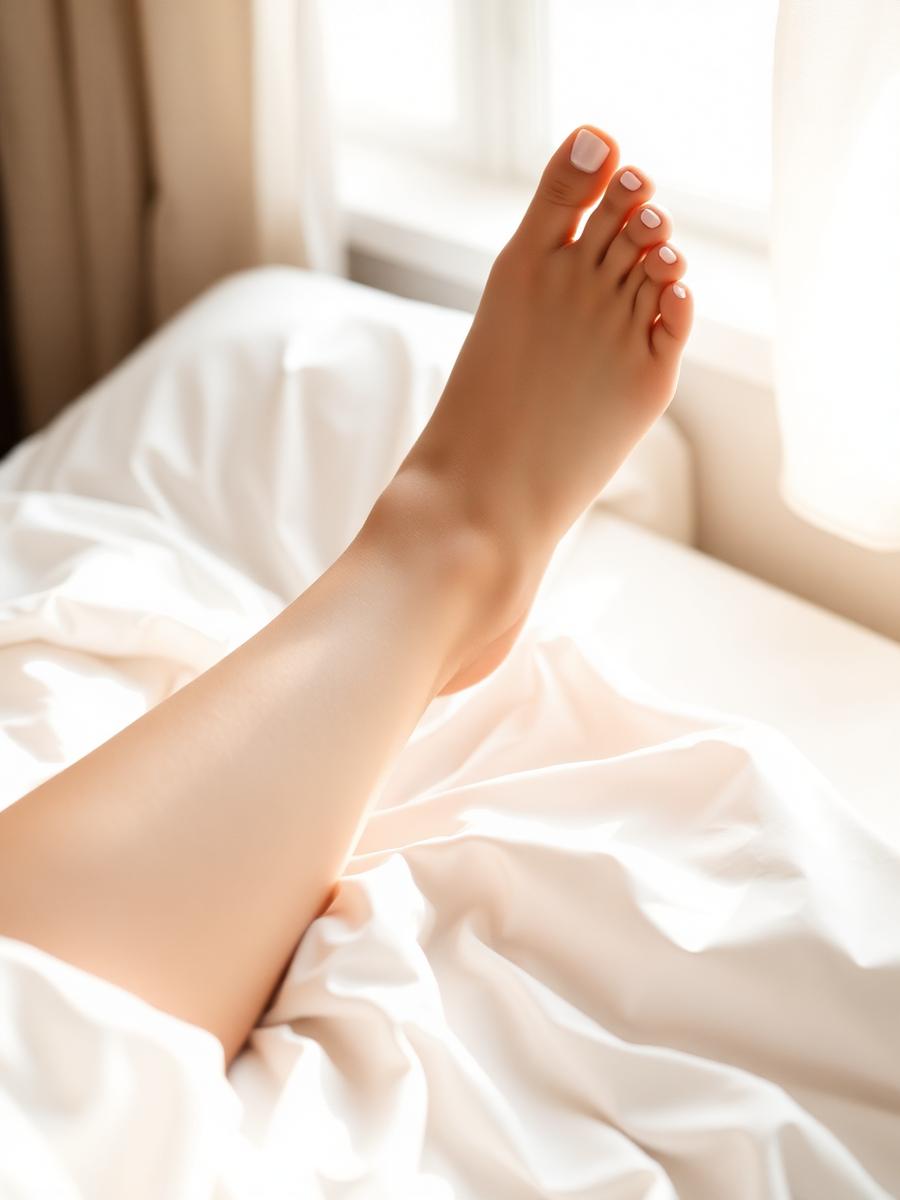
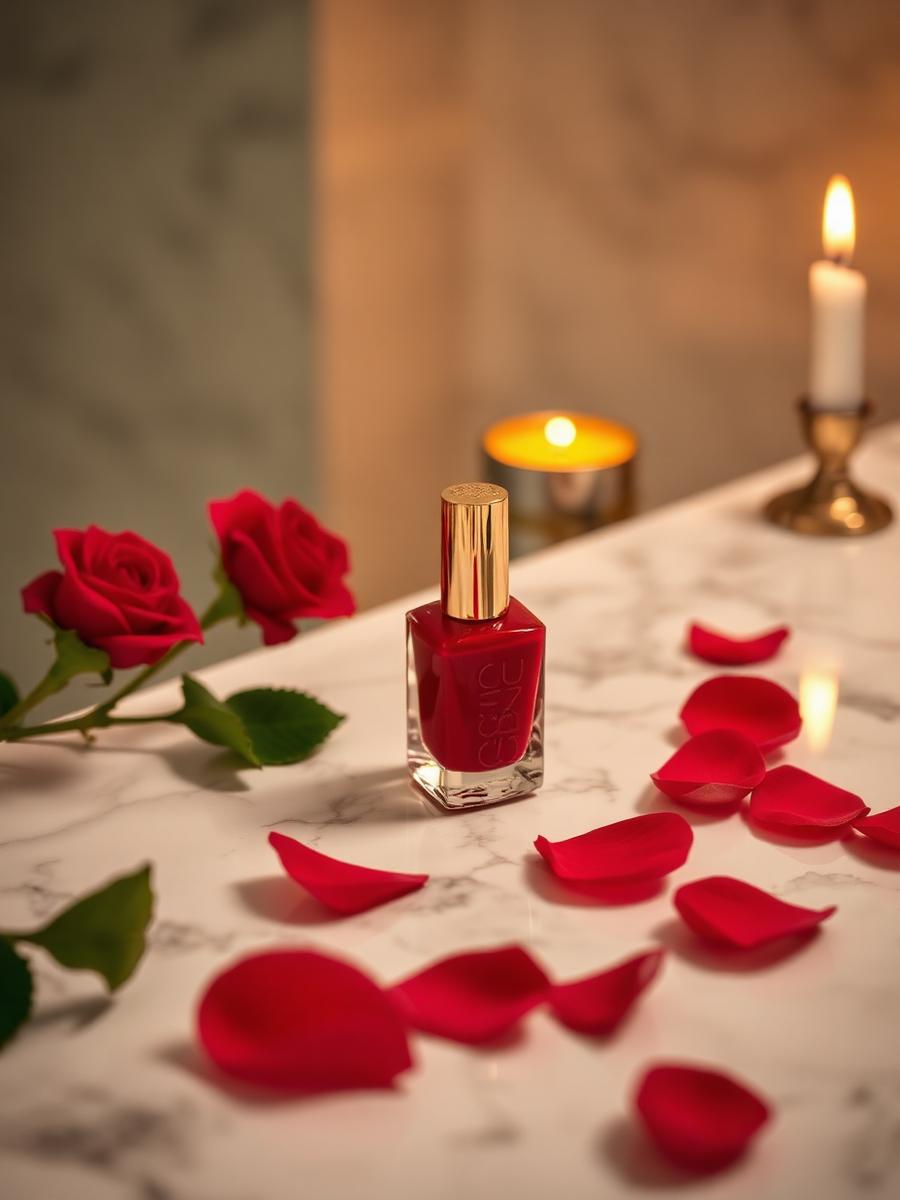
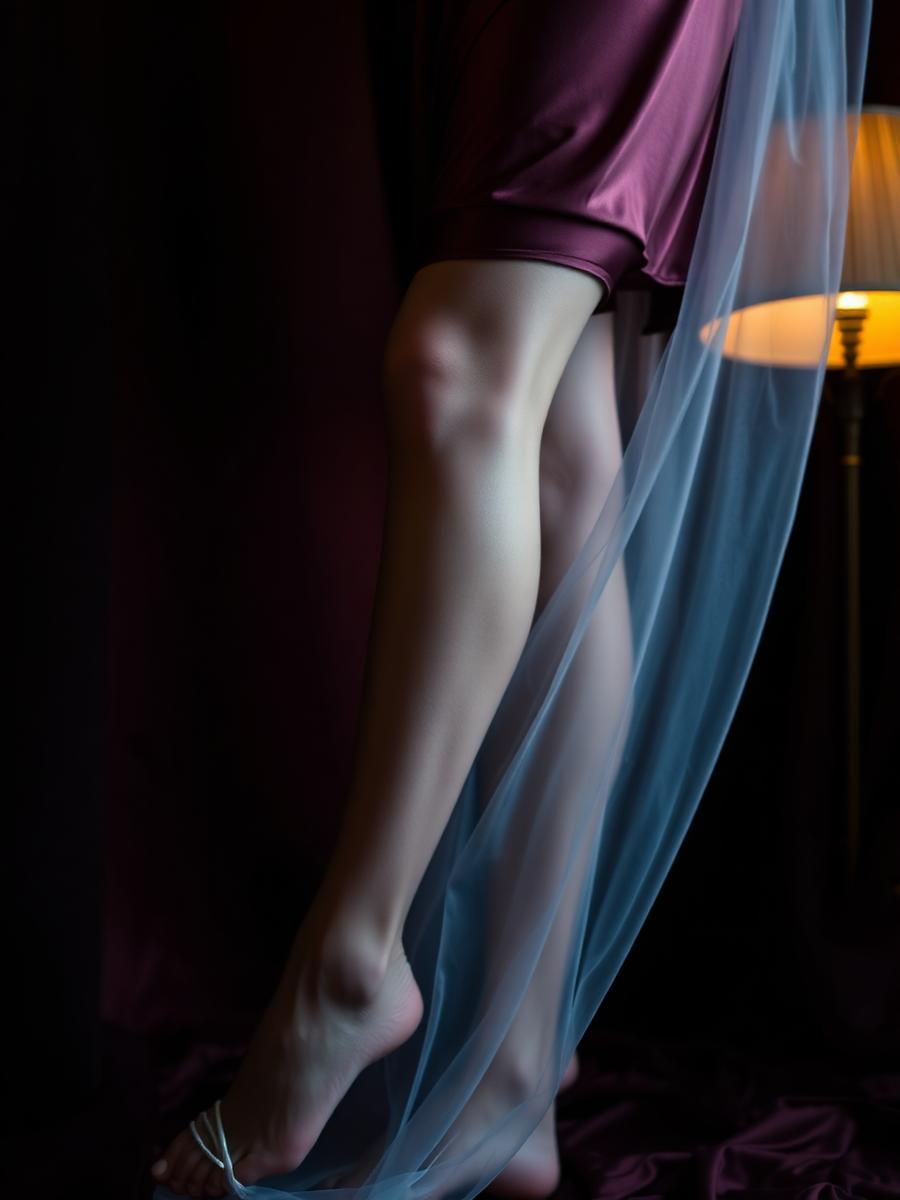
Watermark-free previews, published without metadata.
Questions readers ask
- Do I need a real camera for at-home feet photography?
- No. A recent phone, a window with indirect light, and a self-timer are enough to start. The light and the composition matter far more than the sensor.
- How do you focus on your own feet with a self-timer?
- Place a shoe exactly where your foot will be, focus on it, lock the focus, then trigger the ten-second timer or a remote. Take several frames per pose and vary only the toes and arch.
- What is the easiest setup for a first at-home session?
- An unmade bed in pale linen beside a window, mid-morning, camera at mattress height on a stack of books. It is forgiving, flattering, and where most of this journal's frames begin.
See more of Eva
Discover Eva's private collection
18+ — My private spaces are reserved for adults. The public part of this site contains no nudity and no sexually explicit content.
By Eva
Eva, 38, secretary, petite and naturally feminine. Passionate about refined pedicures, high heels, nylon and tasteful photography. Personal attention, custom content and a discreet private journey.
About EvaContinue reading
The private letter
One letter a month: a new story, a behind-the-scenes note and one photograph that never appears on the site.
Adults only. No spam, no sharing of your address, one click to unsubscribe.