Foot Photography
Feet Photography: The Art of Elegant Feet Pics
By Eva · Published 2 June 2026 · Updated 4 August 2026 · 6 min read
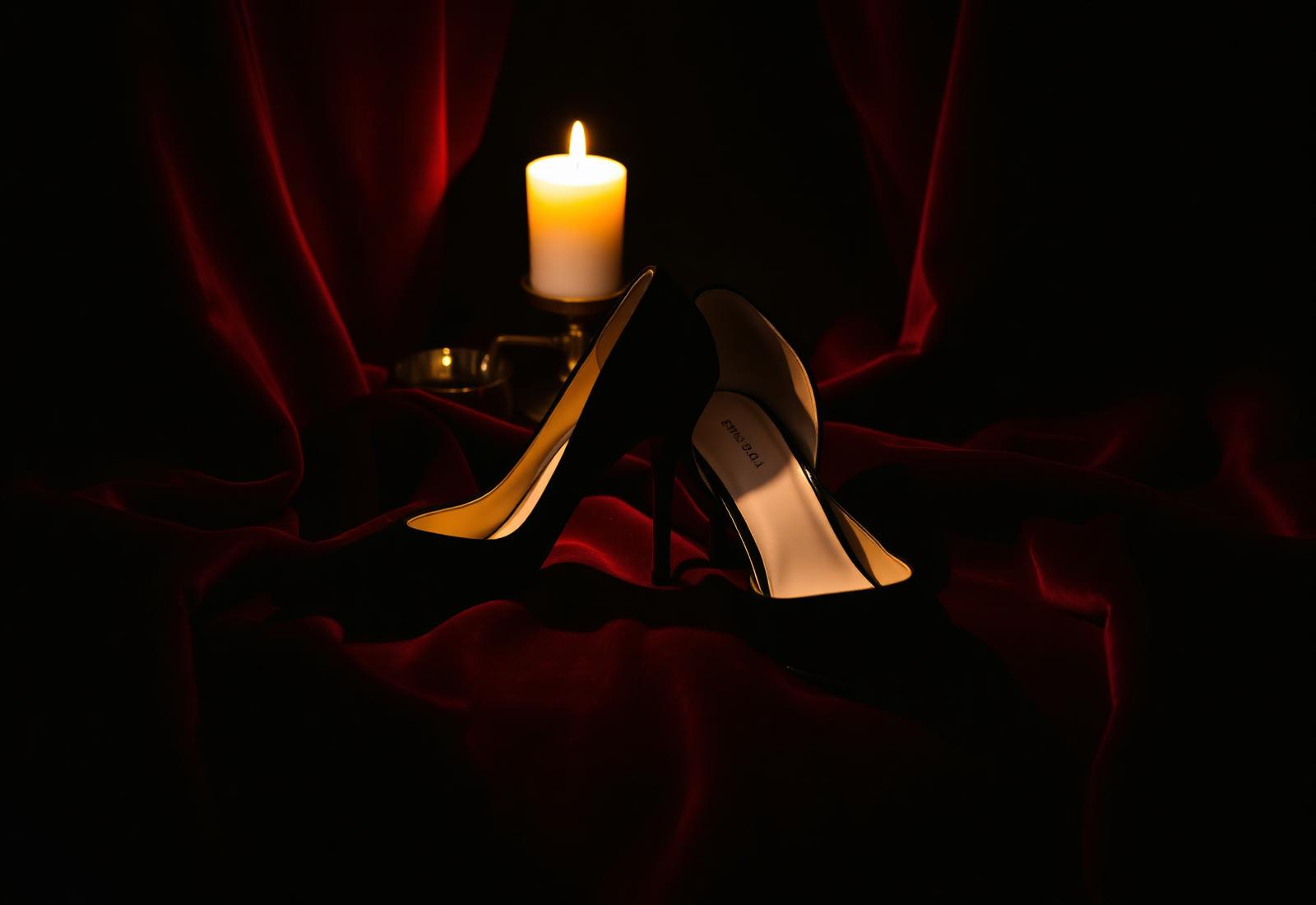
Elegant feet photography is not a subject, it is a discipline. The foot is a small, complicated, extremely expressive shape, and it forgives nothing: bad light flattens it, a careless angle shortens it, a cluttered background turns it into an accident. I have spent years learning to photograph mine the way a jewellery house photographs a stone — one light, one surface, one intention. In this first pillar story I open the method: how I choose the light, how I build the arch, how I use texture, and why the most seductive image is almost always the most restrained one.
What makes a feet photograph elegant?
An elegant feet photograph reads as a shape before it reads as a body part. That is the whole answer, and everything else in this article is a way of getting there. When the eye lands on a clean curve, a soft gradient of light and a controlled background, it registers composition first and content second — which is precisely the tension that makes artistic feet pictures work.
Three failures account for most unflattering images: flat frontal light that erases the arch, a horizon-level camera that compresses the foot into a stump, and a background full of information. Fix those three and you are already ahead of ninety percent of what circulates online.
Elegance is also a matter of what you refuse. I never show more than the frame needs. Suggestion is not prudishness; it is the oldest technique in fashion photography, and it is why a sheer stocking edge can be more magnetic than a bare leg.
Light: one source, many decisions
I work with a single soft source, placed roughly forty-five degrees to the side and slightly above the foot. Side light is what carves the arch; frontal light destroys it. A large window with a sheer curtain does the job perfectly, and so does a cheap softbox at a metre's distance.
The second decision is what you do with the shadow side. A white card, a sheet of ivory paper or a satin scarf placed just outside the frame will lift it enough to keep detail without killing the modelling. For darker, more nocturnal work — velvet, patent leather, candlelight — I let the shadow fall to near-black and keep one narrow highlight running along the instep.
Warm light flatters skin; cool light flatters nylon and patent leather. Mixing them deliberately, one warm lamp behind and one cool source in front, is the fastest way to make a simple photograph look like it came out of a magazine.
The arch is the whole composition
In practice, a high arch foot is not a genetic lottery ticket — it is a pose. Point the toes, then relax them by ten percent so the tendons do not stand out. Let the heel drop slightly below the ball of the foot. Turn the foot a few degrees away from the lens so the outer edge draws a long, uninterrupted line.
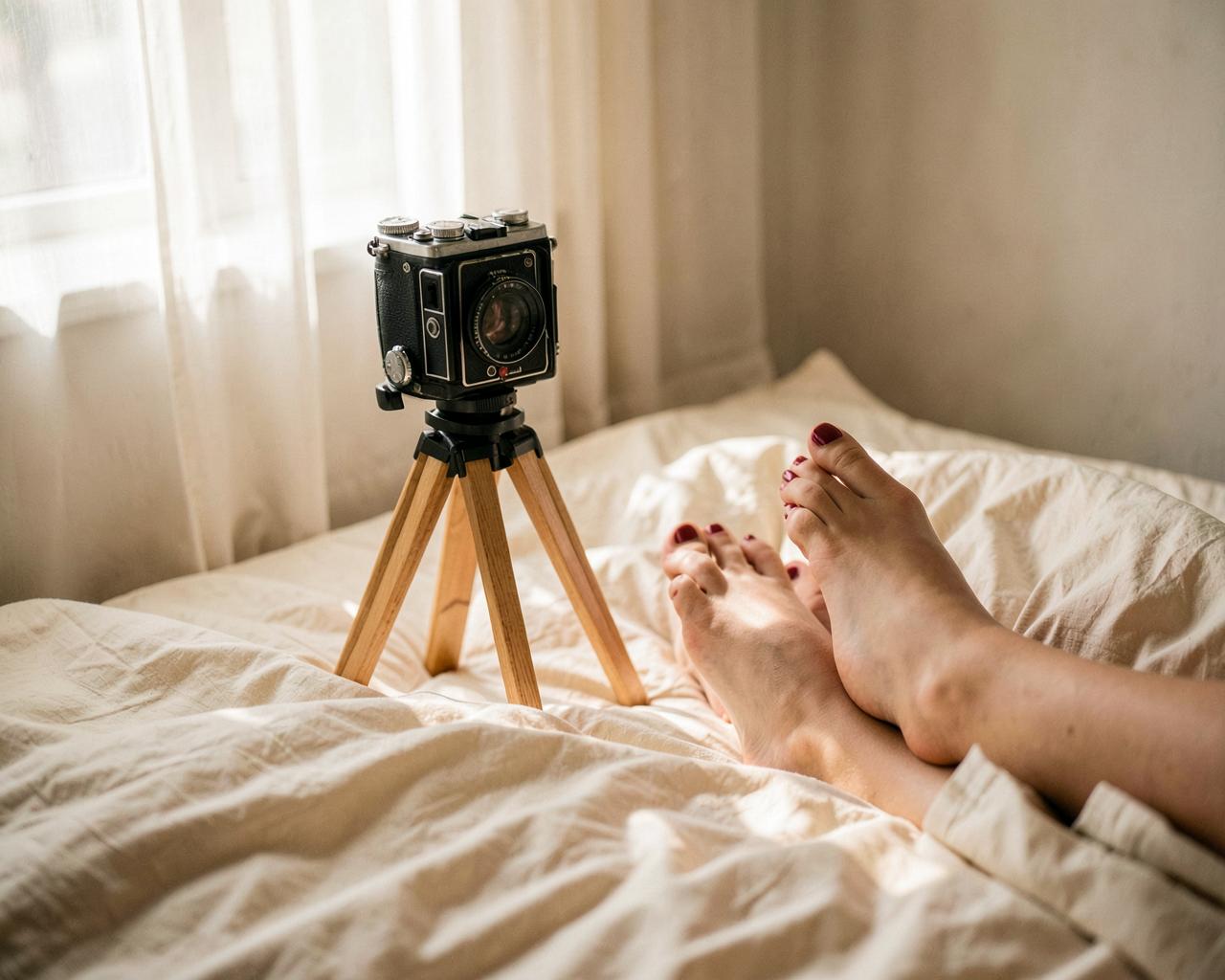
Photograph from slightly below the foot rather than above it. A low camera lengthens the leg and gives the sole its natural dome. If you are shooting your own feet, a phone on a small tripod with a two-second timer will always beat holding the camera at arm's length.
Keep the free foot in the frame but out of focus. A second, softer shape behind the subject gives depth and stops the composition from looking amputated.
Texture: velvet, satin, nylon, marble
Skin alone is not enough material for a photograph. I always introduce one contrasting texture: crushed velvet for depth, satin for the way it catches a single highlight, black marble for graphic reflection, nylon for the veil it puts between the eye and the skin.
Two textures per image is the limit. Three becomes a props table. When in doubt, remove something — a plain ivory sheet under a pedicured foot has carried more of my best pictures than any elaborate set.
Colour discipline matters as much as texture. My palette almost never leaves deep red, bordeaux, ivory, midnight blue and gold, and that consistency is a large part of why the work reads as a body of work rather than a folder of photographs.
Editing, watermarks and what I strip out
My editing is deliberately light: contrast curve, a slight warm split-tone, dust removal, and nothing else. I do not smooth skin. The small imperfections are what make luxury feet pictures look photographed rather than generated.
Before anything is published I strip EXIF data — location, device, timestamps — from every file. Public previews carry a discreet watermark. Neither of these guarantees that an image will never be copied; nothing does. They simply make casual reuse harder and traceable.
The full sets, the higher resolutions and the custom requests never appear here. That separation between a public editorial journal and a private adult collection is the structure of my whole practice.
Detail plates
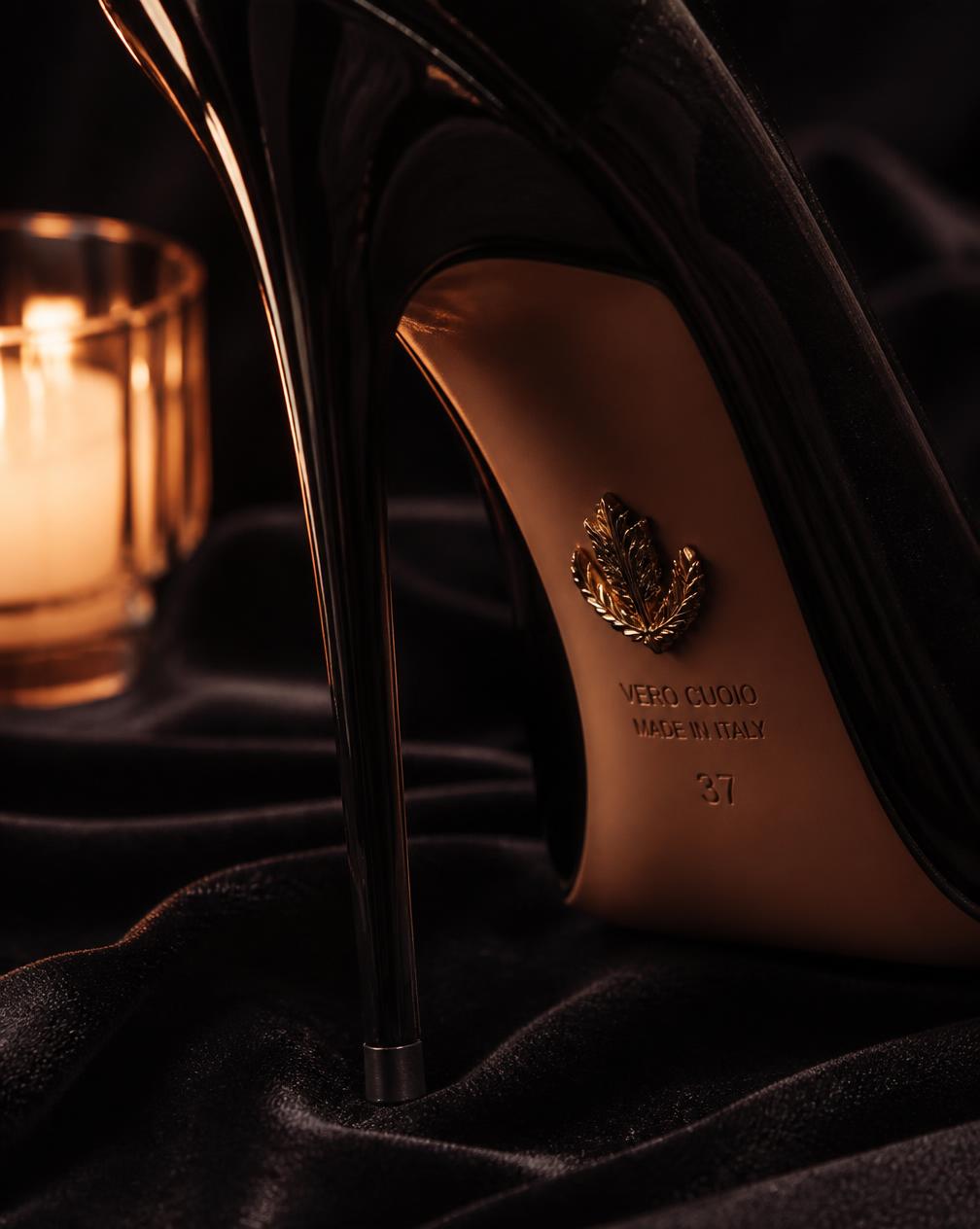
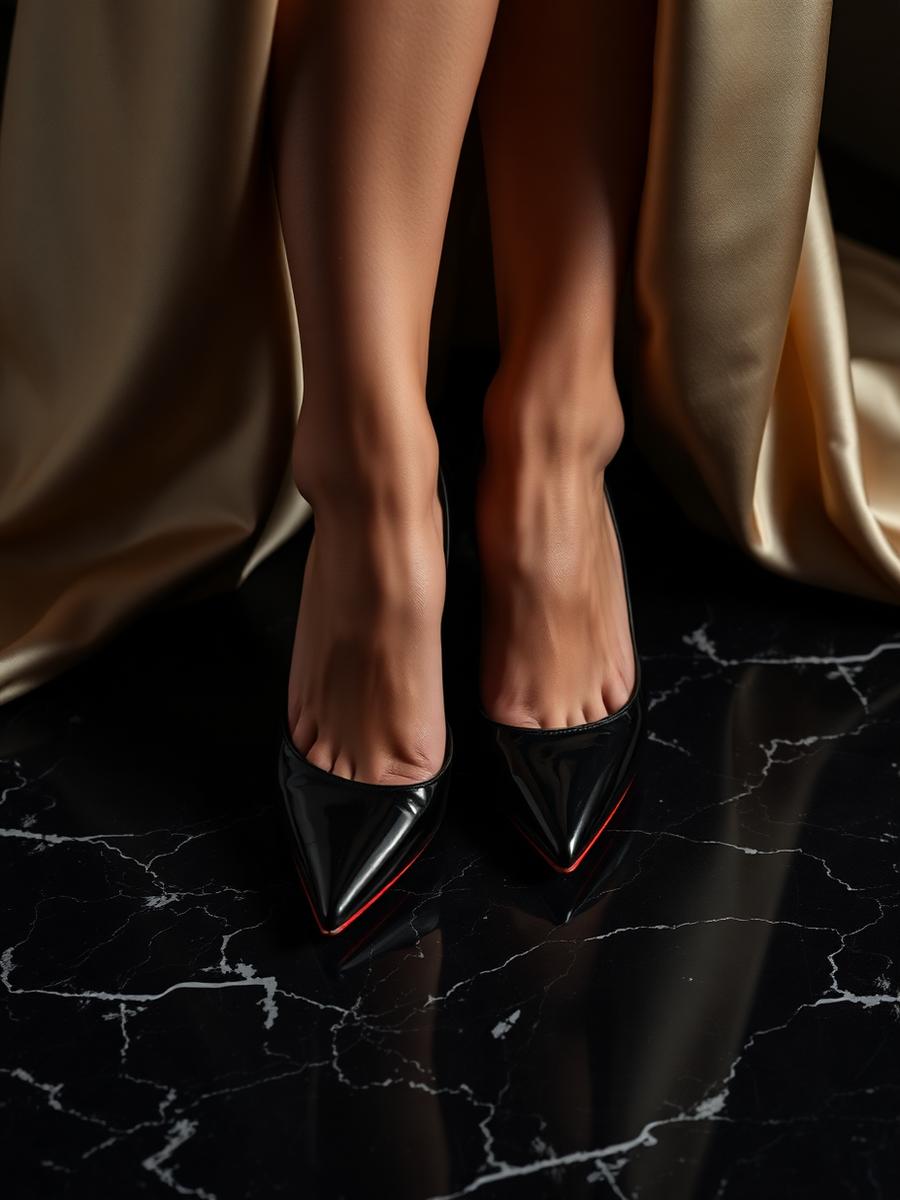
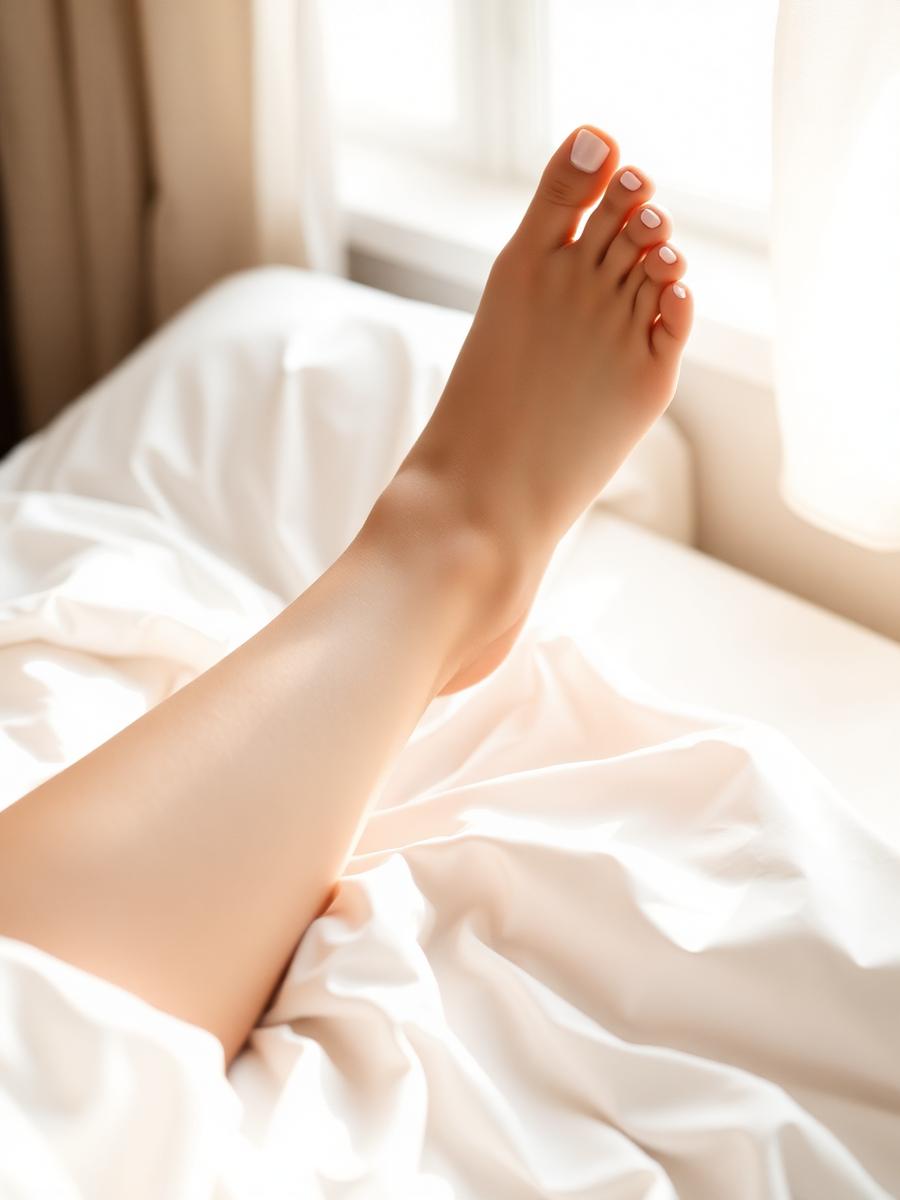
Watermark-free previews, published without metadata.
Questions readers ask
- What camera do I need for elegant feet photography?
- Any recent phone is enough. Light, pose and background decide the image; the sensor decides very little. I shoot part of my own journal on a phone.
- How do I make my arch look higher in photos?
- Point the toes, relax them slightly, drop the heel, rotate the foot a few degrees off-axis and photograph from below foot level with side lighting.
- Is artistic feet photography the same as explicit content?
- No. Everything published on this journal is suggestive and non-explicit. My private collections are adult spaces and are clearly separated from the public site.
See more of Eva
Discover Eva's private collection
18+ — My private spaces are reserved for adults. The public part of this site contains no nudity and no sexually explicit content.
By Eva
Eva, 38, secretary, petite and naturally feminine. Passionate about refined pedicures, high heels, nylon and tasteful photography. Personal attention, custom content and a discreet private journey.
About EvaContinue reading
The private letter
One letter a month: a new story, a behind-the-scenes note and one photograph that never appears on the site.
Adults only. No spam, no sharing of your address, one click to unsubscribe.